Johan Cruyff, guru of total football, died on March 24, 2016 at the age of 68. He scored 33 goals in 48 appearances for his country, Netherlands. He won the European Cup multiple times as a player and then as a coach. He thrice won the Ballon D’Or, an award given to the best footballer of his generation. A select set of players has won it thrice: Zinedine Zidane, Lionel Messi, Cristiano Ronaldo and Michel Platini among them.
Samuel Taylor Coleridge is credited with coining the simplest definition of poetry: “I wish our clever young poets would remember my homely definitions of prose and poetry; that is, prose —words in their best order; poetry — the best words in their best order.”
Coleridge defines poetry both in terms of form and content. The best words indicate meaning and brevity, while the best order suggest form and structure.
Johan Cruyff had a similar poetic vision of football. He often said: “Quality without results is pointless. Results without quality is boring.”
He thought it dull and prosaic if players and teams merely focused on the ends, that is just winning at all costs, which often meant the hard defending of a meager score of one goal, slowing down the game and engaging in all kinds of foul play. Cruyff believed that football could offer beautiful movement, rehearsed artistry and deft footwork without sacrificing on results – the scoring of goals.
Cryuff’s exploits as a genius on the turf are legendary. He almost singlehandedly led Netherlands to the World Cup final in 1974, and earned his place among the footballing greats. But no other legend — not Pele, not Maradona, not Beckenbauer —contributed as much as Cryuff to change the way football is played.
First as a player and later as a coach, he denounced the traditional kick and run football, which is still the staple at many English clubs. He often moaned that football players ran too much. Instead, along with Rinus Michels — coach of Ajax, Barcelona and the national Dutch team in the 1960s and 70s — Cruyff introduced a more delicate and artful brand of football based on passing, possession and intelligence.
It came to be known as total football.
Total football was about attacking defenders, midfielders who played deep and everyone playing in every position. The goal keeper was the first attacker and the central attacker was the first defender. Total football changed the nature of the game and how it was played.
Cruyff often said: “Playing football is very simple, but playing simple football is the hardest.”
Cruyff believed that football was not about physical prowess or skill alone; he saw football as a game of brains. And his entire life was spent in proving this hypothesis. The crowning achievement of this school of thought has been the sweeping success of Football Club Barcelona in the first two decades of this century.
Cruyff gave the process of playing football much thought. At Ajax itself, the combination of Cruyff playing on the field and Michels doing the thinking and organizing off it as a coach, helped their team win the European championship three times in a row in the early 70s. Later at Barcelona, Cruyff put total football into practice and is largely credited to have converted that club into one of the best teams in the world today.
Cruyff often said: “”There is only one ball, so you need to have it.”
The style of “tiki-taka” or short, quick passes followed by Barcelona and later the Spanish national team is much Cruyff’s contribution. Its success has forced other teams, including current world champions Germany, to try to infuse some of these elements into their performance.
Andrés Iniesta, Barcelona captain and a leading practitioner of the Cryuff philosophy, describes Cryuff’s philosophy in action.
1) Keep possession and frustrate the opponent: Every pass is important. A bad pass loses possession and puts the team under pressure. Short passes build momentum and if you have the ball then the opponents can’t do anything.
2) Think on your feet: If you think before your opponent where the ball is going to go then you have an advantage. If you stay with the ball at your feet and think about what to do, you are going to lose the ball. The best players are the quickest thinkers.
3) Defend when you are not attacking: When your opponent has the ball, close him down quickly. Put him under pressure before he’s even had time to think about an attack.
4) Space = time: Always be aware of who is around you: if you feel them closing down, take a touch to move the ball away from them. Try and put yourself in space to get the pass: the more space you have, the more time you have to think.
5) Brain over brawn: If I play against a big player, I play the ball quickly on the ground. Playing a quick one-two is also very effective as bigger players are slower to react and turn. I only weigh 63 kilos so I don’t have weight to throw around. If you can get the ball past them a few times using a one-two they will be more reluctant to rush in and tackle, so you have more space to play.
To achieve the kind of success that Barcelona has, Cruyff emphasized the complete development of every player. Total football is not just a style of playing football where every player in the outfield can play in any position whatsoever; it is also about the development of the player himself into one who is physically fit, has the skills and also thinks about the game.
To create such players, Cryuff proposed that Barcelona should set up a youth club similar to the Ajax Academy. His proposal was accepted in 1979 and the move created La Masia, Barcelona’s fabled youth academy. The success of Spain and Barcelona is heavily credited to the academy graduates, nine of whom form the core of both the Catalan and the National side. Lionel Messi, La Masia’s brightest star, often draws comparison to Cryuff for his grace, performance and development. In fact, Messi dedicated his fifth Ballon D’Or to the academy and wanted it to share it with the young inmates.
Ironically, Messi is built unlike your typical heavy-set footballer. He is short-built and was physically frail when he joined the academy.
Cryuff says, ‘I find it terrible when talents are rejected based on computer stats. Based on the criteria at Ajax now I would have been rejected. When I was 15, I couldn’t kick a ball 15 metres with my left and 20 with my right. My qualities, technique and vision aren’t detectable by computer.’
Although Cruyff is also identified with the famous “Cruyff turn”— where the attacker fools the defender into thinking he is hitting the ball ahead with the free foot, while flicking the ball behind the standing foot, turning the hips quickly in the other direction and running free of the defender, he never confused tricks with actual technique and the team nature, rather than individual brilliance, of the game of football.
In an interview, Cruyff called his famous “Cruyff turn” (see the video above) a trick. He says in the interview that he never believed in tricks. Cruyff said: ‘Technique is not being able to juggle a ball 1,000 times. Anyone can do that by practising. Then you can work in a circus.’
Cruyff’s contribution is all about life and living. Football after all, for Cruyff, was all about time and space, and isn’t that what life is all about too?
Cruyff’s focus was always on process, and about enjoying that process. About total football, Cruyff says that we just played football which the world loved. The question we asked everyone including the spectators and supporters of the opposite team was: did you enjoy?
In an interview when asked about his career he keeps saying: Do you enjoy the game? And then goes to say, “You have to be proud of what you do. But from that stage of being proud – do not think of it too much because you might get a big head. It’s just that I had a fantastic career where I enjoyed myself very much.”
Cruyff was also about winning. He always thought of how one could use every thing in his life to create a win. He once famously said, “Every disadvantage has its advantage.”
Not a very big-built guy himself, Cruyff did not worry that he did not have what was required to become a success in the game. The ultimate martial artist, he quickly converted his weaknesses into strengths. He took what he had, built on it and achieved greatness.
But in order to achieve that greatness one has to think against the grain, think counter-intuitively – do what the others do not want to do. Find merit in the things that no one wants to do. This was reflected in the way he looked at different aspects of the playing process:
‘I always took throw-ins because then if I got the ball back, I was the only player unmarked.’
And then he went on to remark that for most people the game was about having the ball and what they did when they got the ball. His counter-intuitive thinking was at work here too. It is what you do when you do not have the ball that defines you as a player according to Cruyff.
‘When you play a match, it is statistically proven that players actually have the ball three minutes on average, so the most important thing is: what do you do during those 87 minutes when you do not have the ball? ‘That determines whether you’re a good player.’
Thus, if one examines the way Cruyff played the game, one could, learn a lot about living one’s life. Be counter-intuitive; see advantage even in disadvantage; define greatness by a different metric. And be very cognizant of timing – everything in football and life is about timing. As Cruyff said: “There’s only one moment in which you can arrive in time. If you’re not there, you’re either too early or too late.”
And he also mentions how to get that slight head start in life and use it to your advantage: “If I start running slightly earlier than someone else, I seem faster.”
His focus on hard work, practice, and rehearsal was legendary. One did not win games on the field, one actually won them even before the game started: “Before I make a mistake, I make sure I don’t make that mistake.”
The Johan Cruyff Foundation has helped raise money and resources to create Cruyff courts, which are small-size football fields suitable for seven-a-side game – and are an alternative to the disappearing public playgrounds because of urbanization and over-development of land into buildings. There are now more than 200 Cruyff courts in more than 20 countries; and are especially beneficial to children living in deprived neighborhoods, where street football was popularly played at one time but has now stopped for various reasons associated with our cities today.
Cruyff was known to be vocal about his opinions. It is said that it was opposition to what General Franco represented that made him join the Catalan club of Barcelona in the summer of 1973 because “he could never join a club associated with Franco.” And Cruyff was never intimidated by the resources or money that backed the opposite team. He was quoted as saying:
“Why couldn’t you beat a richer club? I’ve never seen a bag of money score a goal.”
Yet it is a rich legacy that Cruyff leaves behind. It is not just the legacy of having scored goals or won championships. He has developed and implemented a philosophy of football, implemented it and seen it bring glories to his club and to his adopted country of Spain, nurtured young talent, and created playing spaces for poor children throughout the world through the Cruyff courts. He is not just a total footballer – Cruyff is a toal and complete human being.
As Pep Guardiola said, “Cruyff built the cathedral, our job is to maintain and renovate it.”
*****
Youtube video – Football’s Greatest – Johan Cruyff (25 mins)
Sanya-sin (Ssin): Why do you sit on an elevated golden throne, Master? Why not sit down here on the floor with the rest of us?
Guru-ji (G-ji): Surely you can guess the answer for yourself.
Ssin: Is it because you want to feel superior to the rest of us?
G-ji: No … I don’t want to feel superior, and yet I am compelled to pretend, for your sake, as though I am.
Ssin: Why is this, Master?
G-ji: I feel superior because I listen to all your idiotic opinions about the world, all day long, and I accept your opinions. Without liking them, I accept them. But very few people can accept mine. Sannyasins say stupid things, and I smile and nod. I smile at the beauty of the utter meaninglessness of your perceptions. Then I say something, I respond to you, and people are shocked. They try to correct me. They tell me I am not “permitted” to think or say what I say.
xx Occasionally, my recognition of this dynamic gives me a feeling of superiority … which is exceedingly unfortunate for me. Because, in truth, I’m in no way superior to you. And yet your chronic inflexibility tempts me into suspecting that I might be, in some way, existing at a higher level.
Ha! Such moments fade quickly, and the light of the Divine disperses this time-wasting confusion.
Here I sit before you — God’s Fool! — watching the discordant flow of your poisoned minds, accepting you as you are. And, daily, I endure the voices and finger-wagging of those accusing me, your so-called Master, of being “cruel” and “inhumane” by sannyasins who’ve tricked themselves into believing they’ve grasped miniscule scraps of insight about life and death.
x xxxxxI express my awareness of this situation by elevating myself. As soon as you’ve learned to accept my idiotic opinions as readily as you accept your own, we can all sit together at the same level.
Ssin: Will you then come down and sit among us, Master?
G-ji: No, I will not. I shall invite you to be seated upon your own thrones, up here with me.
–———–
As overheard by Bear Rajneesh, Esquire in Pune on April 1, 2016 and whispered as a mantra in Brett Davidson’s left ear.
The internet is just great. Thanks to this tool we have been able to meet again after having lost touch for 25 years. Time does fly. It seems like yesterday when we met in college and went together to look for our very first apartment. I remember very well the fabulous parties you hosted and how much you liked going for a walk after snowstorms.
In the last 25 years I’ve been married twice, I had three children and I have never stopped working. I am currently going through my second divorce.
And what about you? What have you been doing all this time?
Unbelievable. How come you did not marry even once? Thus you could not manage to build your life. I’m so sorry, you seemed like a very smart person in college.
In July 2015, thousands of Lebanese citizens rallied on the streets of Beirut protesting against the government’s inaction over enormous heaps of garbage lying all over the city. Barely a week ago, the government had shut the Naameh landfill, that served most of Beirut, because it had outrun its capacity. The city’s garbage collection company just stopped collecting trash two days after Naameh’s closure, saying its own dumps were full. The authorities did not have a backup plan. Trash began to pile up everywhere, rotting in the summer sun. For several months, protesters and police violently clashed in the capital city in one of the biggest shows of civil disobedience in Lebanon in 10 years. This came to be known as the “You Stink” protest movement.
These continuous protests reflect the public frustration at the incompetence of the government to make civic decisions from the time the presidency was vacated in 2014. Appointments, planning approvals and budgets remained frozen, while political camps feuded over who should take the top job.
In February 2016, CNN reported an image of a river of stinking garbage bags that snaked its way through Jeddah, a suburbs of Beirut, a consequence of the still pending and an almost year-long garbage crisis – and a symbol and a byproduct of the country’s dysfunctional politics.
x
*****
Around 4000 kilometers to the East, the city of Bombay or Mumbai (renamed to its original name as a protest against British colonial rule) has been in the news for a spate of fires and subsequent toxic fumes rising from its oldest and largest landfill at Deonar. In 2016, the landfill caught fire four times in the two months of January and February, and each time the fire raged for a couple of days to more than a week, creating a thick blanket of smoke and dangerously increasing the levels of hazardous particulate matter in the city’s air. These garbage fires were so massive that they were visible in space and recorded by NASA.
The World Health Organization recommends PM2.5 (ultra-fine particles that damage respiration) exposure of no more than 25 micrograms per cubic meter over 24 hours. In the days of the Deonar fire, Mumbai’s recorded PM2.5 levels of 333, more than ten times the permissible limit. Local residents that inhabit slums near the landfill complain that fires, polluted air and accompanying respiratory ailments have become a common occurrence. A major fire had broken out at the landfill in February 2015 as well. The latest blaze in March 2016 claimed its youngest victim when a seven month-old baby died after his pneumonia worsened because of the smoke from the fire.
The residents of Beirut took to the streets to protest the piling garbage across their city. The residents of Mumbai also came out on the streets, but, for an entirely different reason altogether. Two days after the first major fire broke in January 2016, citizens of the municipality of Chembur, which is barely a couple of kilometres away from the Deonar landfill, inaugurated a 12 day sports and cultural festival attended by thousands. This festival had citizens of all age groups running 5 kms in a mini marathon and youth teams competing for trophies in cricket, kabaddi and basketball in outdoor grounds; citizens participating in yoga, Tai Chi and cooking workshops, and enjoying other Bollywood-themed competitions and live music concerts in open air venues; while the fires were still burning in the nearby Deonar landfill, polluting the Chembur sky. Flash mobs danced on the streets of Chembur while the trash burned two kilometers away.
With 12 million residents, Mumbai is more populous than countries like Cuba, Somalia, Greece and Portugal. The coastal city produces 9600 metric tonnes of waste every day, accounting for 6% of the total waste generated in India. Mumbai is a land starved city with two thirds (60%) of its population living in slums. The city uses 3 landfills, prime real estate nearly the size of New York’s Central Park, simply to dump its trash on. The first landfill at Deonar that sits on 326 acres in eastern Mumbai and takes half of the city’s daily waste, was opened up in 1927. This landfill is also Asia’s biggest and arguably the oldest dumping grounds. The Deonar landfill currently holds 12 million tonnes of waste so high it could bury the White House – twice over. In 2015, the Bombay high court had ordered for the Deonar landfill to be shut down as it had overrun its saturation point. However it continues to be in use, catching major fires frequently due to the toxic and combustible gases produced as a result of the untreated waste. One of the landfills in northern Mumbai in Gorai active since 1972 was shut down in 2007, as it contaminated the nearby water bodies and led to significant health and environmental damage. Of the remaining 2 active landfills in the city, another one is in the process of being shut down.
Over 1.4 million litres of water have been used so far to fight the Deonar landfill fires this year, wasting an essential resource at a time when the city is also facing water shortage. Environmentalists are horrified at the routine nature of such fires, given the toxic compounds being burnt. Worse still, nobody quite knows what exactly is being burnt, or what is being released into the atmosphere. These fires have led to the Bombay high court restraining the BrihanMumbai Municipal Corporation (BMC), the local government, from granting permission for new constructions, until it came up with an efficient way to manage the city’s waste. When the first fire broke out, the BMC, which is also the country’s richest local government, promised 10 measures to prevent a re-occurrence. The second fire revealed that the promises were not kept. After the third and most recent fire, the only changes that have been observed are the installation of 12 closed-circuit television (CCTV) cameras on the premises, and initiation of building a boundary wall around the dumping ground. Imagine 12 CCTV cameras for 326 acres – that is one camera for every 27 acres; and while work on the boundary wall is on, it is far from over.
While the fires have been a frequent occurrence each year, increasing the incidence of respiratory ailments, morbidity and mortality, the government’s (in)action appears to be more like cosmetic changes. The Deonar fires also bring to fore one of Mumbai’s biggest and looming crisis – its inability to manage its own waste.
Despite being one of the most populous urban areas in the world, Mumbai lacks a scientific waste management system. Except for a low capacity biogas plant in 1 of its 3 landfills which treats a rather small amount of waste, the city does nothing but dump its trash in landfills while its sits there untreated, polluting the air and contaminating the soil and ground water.
Barring for a few housing societies, most households in Mumbai do not segregate their trash. Around 35,000 BMC staff pick up trash from residential societies and industrial areas every day, making a total of 2000 trips from source to the landfills. It costs the BMC 1.5 million Indian rupees each day in waste collection and transportation costs. What reaches the landfills is a mix of kitchen refuse, plastic, glass, paper, metal, electronic waste and construction debris.
Like many other urban areas, Mumbai too, has an informal network of waste pickers, also called rag-pickers, who trawl through toxic landfills, separate waste for recycling and sell it to a chain of scrap dealers across the city. Waste pickers earn anywhere between Rs. 50 to Rs. 100 (75 cents to USS$1.50) per day for the recyclable trash they sell. The BMC has given 1000 waste pickers a license to segregate waste at the landfills, but this arrangement is still haphazard. Scrap dealers then, sell the trash to the informal recycling industry in the city, a large part of which is based in Dharavi, Asia’s biggest slum neighbourhood made popular by the film ‘Slumdog Millionaire’. Economists peg the output of Dharavi at an impressive £700m a year.
Stree Mukti Sanghatna (which literally translates to Womens Liberation Organization), an NGO set up in Mumbai in 1975, has since organized cooperatives of more than 5000 female waste pickers in the city and trained them in waste segregation, composting, bio-methanation, micro-saving and leadership skills. These women proudly wear uniforms, use safety equipment and earn a livelihood while also saving the BMC huge costs in segregation at source and transport, saving space at the landfills, recovering resources in the form of valuable compost, trying to educate citizens and most importantly, conserving the environment.
Sadly, the BMC has failed to integrate this network of trained and efficient waste pickers, and the well-oiled recycling industry, to streamline and improve its own waste management system.
While the BMC has been implementing steps in the last few years, none of these have really worked. In 2009, the civic body awarded a Rs. 5000-crore contract to a private firm, United Phosphorus Limited for scientific closure and waste to energy project at Deonar. However the contractor failed to work within deadlines which led to the BMC terminating the contract in 2016. In February 2016, the BMC appointed Tata Consultancy Services, a leading consulting firm to test the feasibility of a waste to energy plant, bring the civic body right back to square one.
Such was the political attention and outcry over the fires, that BMC officials were called for an emergency meeting by the Union Ministry of Environment and Forests in the capital city of Delhi last week. The Union Minister has given the BMC one month’s time to come up with a short and long term plan for waste management in the city. The BMC wants to shut down 2 of 3 active landfills, one of which is the Deonar ground. The third, remaining landfill does not have enough capacity to serve the city. Experts say that even if the BMC works round the clock, entirely shutting down the Deonar landfill and installing a waste to energy plant could easily take 3 years. Where does that leave Mumbai’s 9600 metric tonnes of waste generated every day? With no active landfill space or a scientific management system or any other plan in place, rivers of garbage spewing the streets just like in Beirut, could soon become a reality for Mumbaikars.
Can Mumbai really turn its garbage crisis around?
Well, evidence from countries like Sweden and South Korea tell us that it could be possible. Sweden has made a thriving business out of the country’s waste churning out millions of dollars as profit each year. Almost 99% of Sweden’s trash gets recycled with less than a percent heading for the landfills. In Malmö, the third largest city in Sweden, food waste is converted to fuel that runs 62% of its public buses. Sweden also imports trash from neighbouring countries turning it into heat for its citizens.
South Korea has piloted a high-tech food waste management program in two of its districts where residents load their food waste into a bin and swipe a card, which gives a numerical reading of the waste’s weight and disposal cost (see image below). Residents are charged based on the amount of food waste they dispose. This new move has already reduced the volume of food waste being disposed by creating a kind of psychological pressure to waste less and hence pay less.
Mumbai does not even have to look that far for inspiration to manage its own waste, when its closest neighbors like the cities of Surat and Pune have been lauded for their sustainable models of waste management.
Surat a thriving economic city in the neighbouring state of Gujarat is around 283 kms from Mumbai. In 1994, the city was struck by a virulent plague. The epidemic and subsequent deaths led to a clash between the local government and the citizens, while also igniting a collective conscience to manage their waste and keep their city clean. The Surat local government got into immediate action and decentralized the city for waste management. It appointed commissioners for each zone in the city and built in measures for accountability. Housing societies were given a monetary incentive to keep their streets clean. Failure to segregate waste was met a heavy fine. Private contractors were bought in to ensure door to door trash collection. Waste transfer plants were set up across the city, from where waste was finally set to the waste treatment plant located on the outskirts of Surat (see image below), converting it into electricity, fuel and compost. While it took Surat almost a decade to implement this massive city wide waste management system, its citizens are now proud of their clean and disease-free localities.
Closer to home, the city of Pune, located around 140 kms from Mumbai, has presented its successful waste management model to several other cities and organizations in the country. The Pune Municipal Corporation (PMC), the local civic body, has set up public-private partnerships to manage its waste. As seen in the image below, the PMC boasts of biogas plants, centralized and decentralized composting and vermicomposting facilities, a waste recycling plant using refuse-derived fuel (RDF), and a waste-to-electricity plant using thermal gasification technology. While Pune population of 3.5 million generates about 1600 metric tonnes of waste every day, its current daily waste processing capacity is 2100 metric tonnes, which it hopes to expand to meet the future needs of its citizens.
The city’s collective effort in garbage segregation and collection is the main reason for its successful waste management. PMC enforces people to segregate dry and solid waste at source. It has also integrated a sizeable number of waste pickers into a formalized door-to-door garbage collection network. In 2008, PMC signed an agreement with SWaCH Seva Sahakari Sanstha Maryadit, a cooperative of waste pickers. SWaCH is short for solid waste collection and handling. Every day, its 2,300 members go house to house and collect 600 tonnes of garbage, 140 tonnes of which is dry. The cooperative covers 400,000 households of the total of 800,000 households in the city, thus two-thirds of the total waste in the city is segregated at source. The PMC also offers a rebate on property tax to residential complexes that take up long term ecofriendly activities such as rain water harvesting, solar heating and vermicomposting. PMC officials conduct monitoring visit to check on defaulting societies. This incentive has been very successful, thus taking care of waste processing at the source. Pune leads the way in terms of an integrated, participatory and scientific waste management system.
Mumbai’s waste management crisis needs a systemic change and long-term commitment. This is not a problem that can be solved in a month or three. Rather, it is a deep-rooted civic issue that needs political priority and accountability as well as citizen responsibility in equal measures. Neighboring cities and far off countries offer Mumbai critical lessons in sustainable waste management including segregation at source, integration of the existing, informal and efficient networks of waste pickers and recycling industries, decentralization of waste collection and treatment, use of appropriate and latest technology to process waste and even converting waste management into a revenue generation activity.
The national government has approved US$15 billion to develop 100 smart cities and rejuvenate 500 others in the country. Mumbai is one of the cities nominated for this ambitious development plan. But the city cannot move ahead in this direction, if it is unable handle its own waste, leading to increased morbidity and mortality while decreasing productivity and quality of life.
Although the residents of Mumbai may not take to the streets to protest waste mis-management like the residents of Beirut, the BMC needs to understand what its people think about waste and how they deal with it. This will help the authorities persuade citizens to act responsibly by utilizing strategic public education, engagement and involvement measures. Rich or poor, Mumbai residents have to be ready to participate and cooperate in managing their waste effectively. The sign of real citizenship is the ability to think about what we do and how that affects our city. Mumbai needs its citizens to voluntarily reduce the waste they produce, sort waste for recycling, keep their own neighborhoods clean, and also act as watchdogs for monitoring initiatives. Mumbai also needs a public-private-citizen movement to manage its own waste and also to survive.
However, the civic body needs to first take the issue of waste very seriously by garnering interest and commitment from within the organization, while also safeguarding waste management initiatives from existing problems such as corruption.
It is important to note that Bombay, Mumbai under British rule, had created one of the best sewage management systems in the country. And it is imperative that the authorities of Mumbai realize that changing the name of the city will not reduce its stink. Mumbai, by any other name, will stink the same. Only more in the years to come.
No one can hear me. Over the noise and dust of all the hard electioneering for the post of Presidential nominee. The Presidential campaign is exactly like that for any consumer item. Pick one Presidential nominee from among many. You choose.
Choose me – screams a presidential hopeful to a young, gun-carrying, evangelist Christian. I promise to give you what you want, says the presidential nominee from the podium.
What does the a follower of Christ, who carries a gun, want?
Choose me – screams a lip gloss to a young woman confused about her own sexuality. I promise to give you what you want, says the lip gloss from over the counter at a fancy department store.
What does a young woman, who is unsure of herself, want?
So everyone screams. Anyone or anything with an agenda screams. Anyone or anything without an agenda screams too.
The television, the media-experts news-anchors, products at Walmart, Wal-mart itself. Lovers scream, children do it as a birth-right, priests and politicians scream from their pulpits, motorists scream from inside their cars, even wives and husbands scream at each other, everywhere. Everyone screams. Even people’s clothes scream their brands, Everything screams.
Why? To get themselves seen, get their voices heard over the noise, over the clutter. There is too much noise, too much clutter, they say.
Everyone wants you to choose them or choose what they they are selling?
What if I chose silence?
Is that choice even on the menu?
No. You cannot have silence, says the presidential nominee. You cannot have silence, says the lip gloss.
Immediately there is attraction on many different levels.
You discover there are plenty of commonalities and similarities.
There is ease between the two of you.
It feels like you’ve known this person for years, if not lifetimes.
Your mind races with different thoughts— Is this person a soul mate?
A twin flame perhaps?
Were you supposed to meet at this predetermined time in this life?
Were you together in another life, and therefore have an agreement to connect?
Do you have a karmic debt?
Are there unsatisfied vows, covenants, and contracts between the two souls?
All of these thoughts coursing through your mind in an effort to justify the instant attraction between the two of you, and the undeniable attachment to the concept of “The One”.
Many of us were raised with this concept of “there’s one person out there, just for us.” Even now, though we are logically minded adults, pervading our better judgment is this fascination with the magical romanticism linked to “The One.” Hollywood supports it and exploits it. So do ads in magazines and commercials on T.V.
We are totally manipulated into believing that there is only one mate for us.
This piece is not to determine the viability or existence of soul mates and twin flames, but to argue the point that we, at any given time in our lives, have free will. We have choice. We can satisfy karmic debt and move on. Destiny does not have to be our fate.
Caveat: This piece is based on societies that support equality between the genders. With those that do not, of course, free will is limited. Within Isis and other extreme Islamic societies, women’s rights and free will is greatly reduced if not non existent.
I will repeat: we ultimately have free will which is present karma. Destiny is past karma, which influences the present.
In Traleg Kyabgon most recent book,” Karma, What it is, What it isn’t, and Why it Matters”, he defines karma and its influence through the lens of Buddhism. “Basically the Buddha defined karma as action, in the sense that we ourselves are responsible for our own condition in the world and that our thoughts and actions from here on determine our future. Buddhist karmic theory is not akin to fatalism or predetermination. We do have real choice in our affairs…In the end, this is the real Buddhist perspective of karma, which is about attain freedom—how to free ourselves from a variety of karmic hindrances and constraints.”1
Thus, even if we are “destined” to be with someone, we still have the opportunity to exercise free will. We can choose. We can assume responsibility in the present, which will ultimately create our destiny.
“Who you marry and when you die was written on your forehead the day you were born,” my mother told me when I was young”, writes Nane Selmani in a recent article, “I Pleaded. I Waited. I Married”, in Parabola magazine.
“I was relieved. It was lucky that God, the Infinite, the All Powerful had things under control. They were much too important to be left up to us to get wrong. Kismet or Ish’Allah—God willing is used as a qualifier of plans, for nothing happens unless God has willed it. No one stood a chance against fate so you let go and never questioned.”
She did follow the ancient mores of her ancestors and community. She married a man who was deemed her destiny.
She continues with her story, “Eight years later I risked everything and left my husband and children. Had I chosen this or was it kismet? Had God selected a path that had been embedded in me? One that came to fruition without any real participation on my part? Or was I choosing every step of the way? I chose to believe it was me.”2
She married and she eventually left. She exercised her free will, which was her choice in the face of what was believed to be destiny. She rose beyond the common belief, and committed action which was correct for her health and well being.
According to Ms. Selmani’s religious perspective in her quote, I sense that there is separation between herself and God. She followed God’s will and married the man who was believed to be her fate. In the end, she questioned her path of leaving, was it God’s will or was she choosing? I believe that they are one in the same. God’s energy flows through her as it does all sentient beings. Hence, the decision was made by her…and by God. She tapped into her God Self, her Divine nature, and realized that the current situation was not supportive of her Divine expression. She and God made the decision to leave.
We don’t know if she found another. We can only hope she realized that there was not just one person in this world for her, which is an ego conceptualization, but trusted that there were many “ones”.
Keeping with this train of thought, I will make an ambitious statement… that we are all soul mates, all on the same journey home, and each one of us could indeed be “The One” for another.
Where is home, you may ask? The Divine. To expand into the realization that we are all divine, every single being. We are here reflecting that purpose and intention to one another.
As soon as we define and categorize one as “soul mate” or “twin flame”, we are negating all he/she could possibly be in our lives, and subsequently classifying our connections to humanity which could produce bondage and limitations.
“Soul mates are brought into your life so that you can grow and expand into the best version of yourself” says author Shelly Bullard.3
My response to this statement is: Wouldn’t that be everyone who is in your life? Not just your romantic partner? How about the plumber who just fixed your toilet, your boss who just sent you a stern email, your teenager who just failed algebra, or the person who turned in your wallet you left at a restaurant—all of these people are potentially soul mates as they are allowing you to grow and expand into your Divine loveliness, if you choose.Their presence in your life is giving you a choice to either act mindfully or react unconsciously. Exercising free will, present karma, as you journey through the convoluted twists and turns of reality. It’s really that simple.
Swami Vivekananda puts it this way, “If you think that you are bound, you remain bound; you make your own bondage. If you know that you are free, you are free this moment. This is knowledge, knowledge of freedom. Freedom is the goal of all nature.” 4
Our birthright is limitless, free, and oneness with all. Why would we want to control that with the ego construct of definitions? Why would we want to put a time constraint on freedom? Does it really matter if we knew a certain soul in another lifetime? Or that we might have unfinished business? Isn’t the most important action the one we choose in the present? And we have the freedom to choose. We have the choice to exercise free will or follow destiny. Just knowing this produces freedom.
Or as Issac Bashevis Singer so poetically states, “We must believe in free will, we have no choice.”5
Free and fair competitive elections, that represent the will of the people, are a fundamental requirement for a modern democracy. Since the 17th century, representative democracy has been characterized by the conduct of elections among the public to choose a person for public office. And slowly but surely more and more excluded groups have become members of the voting public thanks to progressive movements of universal suffrage. However, the case of electioneering today in the two largest democratic countries – India and USA – raises the question whether elections have become the fundamental sickness, the cancer, of democracies?
Alexander Fraser Tytler, (1747 – 1813), Scottish advocate and Professor of History, and Greek and Roman Antiquities at the University of Edinburgh, dismissed the more optimistic vision of democracy by commentators such as Montesquieu, and representative democracies such as republics in particular, as “nothing better than an Utopian theory, a splendid chimera, descriptive of a state of society that never did, and never could exist; a republic not of men, but of angels.” Speaking about the measure of freedom enjoyed by the people in a republic or democracy, Tytler wrote:
“The people flatter themselves that they have the sovereign power. These are, in fact, words without meaning. It is true they elected governors; but how are these elections brought about? In every instance of election by the mass of a people—through the influence of those governors themselves, and by means the most opposite to a free and disinterested choice, by the basest corruption and bribery. But those governors once selected, where is the boasted freedom of the people? They must submit to their rule and control, with the same abandonment of their natural liberty, the freedom of their will, and the command of their actions, as if they were under the rule of a monarch.”
In India, voters are paid to vote for specific parties; bribed with booze bottles and TV sets by contesting candidates from every political party. In South Korea, in recent elections (April 2016), elderly men were allegedly given erectile dysfunction drugs to buy their votes in legislative elections. The incident happened just 30 kilometers south of the capital city Seoul, in a place called Suwon. Prosecutors launched an investigation to investigate how the candidate was able to procure so many pills as these erectile dysfunction drugs are a prescription medication in South Korea. Election time is spending time – alcohol, cigarettes, sex pills and TV sets… whatever gets the audience in an agreeable mood.
Candidates contesting elections are only interested in how much money they can pocket after getting into office; after all every investment looks for a handsome return. And though some in USA may frown on this as being dirtily Third Worldish or Asian; and experts from the Economist Intelligence Unit may call countries such as India a flawed democracy – the situation in the US is not very different.
Corruption by any other name should still smell as foul. Candidates in USA take huge sums of money from lobby groups to campaign; and vested interests of the corporate lobby groups become paramount for the politician voted in office rather than the interests of the people. Now this has angered many people in the USA as that country experiences a decidedly anti-establishment turn in its 2016 presidential campaign; and this anger towards the establishment even threatens to fracture one of the two large political parties.
However, there is a deeper divide within the larger voting public of the United States. Although the supporters of some of the right wing candidates such as Trump or Ted Cruz feel that attacking the establishment will solve the woes of the political system and that is enough. Their assumption is that the political and economic system of the US is inherently great – the best – and that it works; it is just these corrupt and selfish politicians in Washington who are the problem. In order to make America great again all we have to do is replace them with someone who understand s the inherent greatness of America and is not a Washington-insider.
On the other hand many young educated voters think that merely attacking the political system is necessary but not sufficient. These young people want an overhaul of the economic system and therefore support Sanders, a so-called left-leaning candidate. These young people make the assumption that there is something inherently wrong with an economic system that promotes inequality. However, the candidate, who is leading the races, seems to be addressing or at least attempting to show her concern for the larger problem of “racism” that has plagued America since its birth.
Democracy in America is at the crossroads – politically, economically and socially. Yet, it continues to go about its democratic process with the business-as-usual attitude.
In India, it i the same – voters continue to accept bribes during elections, and then express a strong feeling against corruption after the elections. There seems to be a predictable cycle to the occurrence of anti-corruption or other anger-laden movements. One can almost predict the next round of protests, which also systematically fizzle out. Politicians take stances as per their reading of the public mood; they think that their job is to simply make speeches and let the people hear what the people want.
Instead of addressing the systems of politics, economy and society – politicians hire marketing and public relations posers as advisers, pay them huge amounts of probably public money, to solicit their so-called advice in getting to know what people want and engage in image-makeovers to appease the public. Isn’t it strange that in a democracy, a politician who is supposed to have risen from the masses, needs a marketing and polling team to understand what people want? isn’t that enough evidence to show how far removed this process is from the grassroots.
Wasn’t a democracy supposed to be the place where a simple farmer or a shoe salesman in some remote village in the interior could rise up to become the leader of a nation through sheer hard work, contact with the masses, having a deep understanding of people’s needs, and balancing it with the various forces at play. But, ultimately listening to the public rather than just giving speeches and staying in election mode throughout their tenure. Democracy was all about opportunity – what the masses did not have in monarchy and feudalism. But the era we inhabit seems to exhibit greater inequality than before. The elites, who do not use the term monarchs, have much more money and technological power at their disposal. More dangerously they have managers and lawyers. educated in the best institutions, the sharpest minds of the world to protect them from the rule of law and expand their wealth. The Panama Papers to me is more a case of how financial managers and accountants have flouted and bent the rules to suit their wealthy masters. It is a case of the human mind educated and used for the wrong purposes.
People, in their desperation, continue to either support one party or the other, even though one, two or all parties are useless when it comes to governance. People in democracies are caught in this bind that they have to make a choice; if they do not make a choice the system and their way of life will crumble.
*****
Recent reports estimated that nearly 90,000 million Indian Rupees or approximately US$1.5 billion will be spent to buy votes in the south Indian state of Tamil Nadu, where state legislature elections are scheduled for mid-2016. It is said that almost 60% of the electorate will get cash or gifts to the tune of $50 each. Now $50 per vote; that does not seem like a large amount of money; but when added together it is a huge sum; almost 1% of the GDP of Tamil Nadu, which in in 2014-15 was US$150 billion. Public health expenditure in India, in general, is at or less than 1% of the GDP.
The report says some form of bribing of voters started from the 1990s or even earlier, but many experts says that the 2006, 2011, and 2014 elections saw a huge increase. The larger question is: How do these candidates get the money to pay out such huge amounts to voters and how will they ensure recover? The voter taking the money is also not ignorant of the fact that the winning candidate will use corrupt means to recover the money invested in the election. The obvious answer is the winning candidate will engage in many corruption scams when he or she gets into power. A clear example of how corruption has seeped into the heart and sinews of the democratic process – the election itself. In fact, a recent newspaper article reported on how the incumbent Chief Minister interviewed candidates personally for this election and the one question asked of everyone was whether they had money to participate in elections. This is institutionalized corruption starting with the election process.
USA, a developed country, is no different. An article in The Economist wrote that the total cost of the 2012 elections in the USA, including congressional races, topped 7 billion US dollars; of which, 2 billion dollars were spent in the 2012 Presidential contest alone. A report in www.thehill.com estimates that the 2016 presidential election will cost as much as $5 billion, and top fundraisers and election-experts are already predicting it will more than double the 2012 campaign’s price tag.
The election system itself is flawed; and this flaw is most apparent in exemplar of all democracy in the world – the United States. Whenever we see elections covered in the news channels, what we find is this familiar map of red and blue states as per their geographic size. It creates this comfortable feeling that each state is represented and weighted proportionate to its size.
However, www.npr.org (graphics credited to Adam Cole) used data from the 2008 Presidential election to create a morphed graphic or image of the United States which clearly demonstrates that in US presidential elections state size does not matter. Electoral votes are more important and just looking at the US through this lens distorts the importance and relative size of the states. when they are re-scaled or re-sized based on electoral votes. The map of the US morphs into some other shape altogether when campaign ad-spending by state is factored in.
As the short animated film below demonstrates aptly, the United States that matter to the electioneers and campaigners who want to win elections is very different from the US that we are familiar with and see in the usual maps. Right from the start of the election process, how the candidate and the entire lobbies backing her / him views you, if you are in an unimportant state, is very different from how they would view those in so-called “swing” states that are more important for winning elections. The idea of equality dies the moment an election is announced. Wasn’t it the Declaration of Independence that stated “All men are created equal.”
The second paragraph of the United States Declaration of Independence says:
“We hold these truths to be self-evident, that all men are created equal, that they are endowed by their Creator with certain unalienable Rights, that among these are Life, Liberty and the Pursuit of Happiness. That to secure these rights, Governments are instituted among Men, deriving their just powers from the consent of the governed…”
Where is that equality for all gone? If Martin Luther King (MLK) were alive today, would he stand up and say – I have dream or would he be having nightmares instead?
When billions of dollars are spent on election campaigns, obviously lobby groups and vested interests are at play. When, at the end of the elections, the victorious candidate flashes the traditional 2 finger V for victory sign, he or she is very obviously showing the index finger which says: “You are my Number One” to the corporation or financial backer that funded the campaign and the middle finger to the people. There is no need for analysis here. The problems that will be solved in the next four or five years are the problems faced by the lobbying corporation, not by the majority of voters.
Citizens United v. Federal Election Commission, a U.S. constitutional law case, deals with the regulation of campaign spending by organizations. The United States Supreme Court held (5–4) that the First Amendment prohibited the government from restricting independent political expenditures by a nonprofit corporation, and also extended these privileges to for-profit corporations, labor unions and other associations. A second controversial ruling, SpeechNow.org v. FEC, by the D.C. Circuit Court of Appeals a few months later, held that there should be no limits whatever on the contributions to groups making such expenditures. (The term Citizens United has come to refer to both cases.)
Allowing unlimited election spending by individuals and corporations, the Citizens United decision exposes US elections to money, from corporations and wealthy individuals, in a much greater manner than ever before. The Citizens United decision also paved the way for creation of Super PACs (political action committees), a concrete example of the how big money influences the conduct of elections. And all of this in the backdrop of a time when there is far greater economic inequality in the world than ever before. The Oxfam report, An Economy for the 1%, shows that the 62 richest billionaires own as much wealth as the poorer half of the world’s population. The wealth of the poorest half of the world’s population has fallen by a trillion dollars since 2010, a drop of 38 percent. This has occurred despite the global population increasing by around 400 million people during that period. Meanwhile, the wealth of the richest 62 has increased by more than a trillion dollars.
Of course, people are angry, whether they are from the right or the left. Most people today would agree with the statement that they have no say about what the government does or that they cannot control the large corporations from controlling their elected leaders. So the people who enjoy establishment-bashing support Trump, while those who want to bash Wall Street and crony capitalism support Sanders. The leaders speak exactly what their followers want to hear. None of them have a systematic plan in place to solve the country’s illnesses and no voter has demanded a systematic plan from them. They candidates keep talking, the people applaud or jeer, and the circus goes on.
Just as many of us mistake a wedding for a marriage, we mistake the elections for a real democracy. It is not just about holding free or fair elections every few years, democracy is larger than that. It is about representing the people, giving a voice to the people, it is about getting people to participate in the process of government. However, when democracy is misunderstood as simply winning elections, then it leaves no space for true democratic leadership. Because the elected representative believes she is merely is a representative of the people, she has no compulsion or obligation to show the people the right path. The politicians says whatever he can in order to please and get the votes. The politician becomes the follower of the fickle polls rather than leader who shows the path; a bad salesman rather than visionary leader.
If you talk to the democracy cheer-leaders, many will cite numerous examples to show the democracy is working today; that far more countries are democratic than ever before and they even cite the rise of Mr. Trump, a non-establishment person as an indicator of the vitality of democracy.
It is important to re-consider the work of French historian Alexis de Tocqueville (1805 – 1859), who studied and wrote about American democracy, and found that aristocratic elites had been replaced by democratic elites. These new elites obtain power through appeals to the masses; and retain power by appealing to the masses.
More than elites what Tocqueville was afraid of was the unfastening or unhinging of restraints required to keep a liberal democracy based on majority rule in working condition. The people who win through majority rule tend to stifle dissent in almost despotic manner, considering their popular mandate as license for crushing anything that goes against their chosen path. Blaming majority rule as a chief factor in stifling thinking, Tocqueville wrote: “The majority has enclosed thought within a formidable fence. A writer is free inside that area, but woe to the man who goes beyond it, not that he stands in fear of an inquisition, but he must face all kinds of unpleasantness in every day persecution. A career in politics is closed to him for he has offended the only power that holds the keys.”
Tocqueville argued that a serious problem in political life was not that people were too strong, but that people were too weak and felt powerless; the danger is that people felt swept up in something that they could not control. The new elites, produced by today’s democratic election processes, pander to the public, the lowest element. The leader instead of leading, showing the way, decides to follow the people. Distributing booze or $50 to the public is one example; telling the people that a wall will be built on the border and people from another country will be punished is another example. This kind of pandering by so-called leaders has a degrading effect on ethics, morality and society in general. When truth becomes irrelevant; and what the masses feel is most important, there is a tendency on the part of elite leaders to become amoral.
After all, the leaders in a populist democracy have to follow the people. This amorality is often the surest path to depravity and corruption. Tocqueville saw mass conformity to public opinion as a problem for democracy. John Lukacs (born 1924), Hungarian-born American historian and self-described reactionary, who has written more than thirty books, sees democracy as degenerating into nationalist populism in the US. The central tenet of populism is that democracy should reflect the pure and undiluted will of the people. This means that any leader, liberal or right wing, can use it; although politicians often use the terms populist and populism as pejoratives against their opponents. Such a view sees populism as merely using rhetoric or unrealistic proposals in order to increase mass appeal and garner more votes.
Lukacs, a self described reactionary on the lines of Churchill (and that should say a lot about his leaning), however makes some solid points against the current version of democracy. The prevalence of politics by poll and publicity in the West has led politicians away from true leadership and become more concerned with what “the people” want. It is thought processes and psychology that are important in a mass democracy and Lukacs writes: “our concern must be with how people think, how they choose to think, including how they are influenced or impressed to think and speak.” Lukacs has also been highly concerned with the role of television in manipulating the public through the subtle distortion of words and speech. As optics and talking points become important there is little genuine debate, and no space or any platform at all for dissenting voices.
Jose Ortega y Gasset (picture above) was a Spanish liberal philosopher whose body of work was produced in the first half of the 20th century, a time when Spain oscillated between monarchy, republicanism, and dictatorship. In his 1932 work Revolt of the Masses, Ortega y Gasset discusses the rise of the “mass-man” in social and political life. This mass-man is a cognitively primitive man; who takes it for granted that civilization is “just there” and has no appreciation for the intricate processes that are required in order to maintain it. Mass-man uses all the products of modern civilization, but does not appreciate nor respect the superior intelligence and effort by the individuals who are responsible for their development. Content in his own mediocrity, mass-man feels it unnecessary to strive toward excellence. Like a spoiled child mass-man feels compelled to impose his will on everyone.
Benjamin Barber terms this as infantilism – in his book Consumed: How Markets Corrupt Children, Infantilize Adults, and Swallow Citizens Whole: How Markets Corrupt Children, Infantilize Adults and Swallow Citizens Whole. Barber finds that consumer culture has turned adult citizens into children by catering to the lowest common denominator and that the market has conditioned us toward convenience, taking the easy things, and rejecting anything that requires hard work, persistence or is even slightly complex.
Most interpretations of Ortega’s book claim that there is inherent elitism and anti-democratic bias in his writing and even some contempt for mass-man. Ortega y Gasset is certainly elitist, however, he glorifies the elites who invest in society and contribute to it, not those who cling to power for its own sake and justify their hold by clinging to the past. Ortega points to liberal democracy as the ideal form of government, when in fact it is quite contradictory because any democracy is the rule of the will of the people and therefore likely to give more power to the mass-man. Ortega writes:
“The political doctrine which has represented the loftiest endeavor towards common life is liberal democracy. It carries to the extreme the determination to have consideration for one’s neighbor and is the prototype of ‘indirect action.’ Liberalism is that principle of political rights, according to which the public authority, in spite of being all-powerful, limits itself and attempts, even at its own expense, to leave room in the State over which it rules for those to live who neither think nor feel as it does; that is to say as do the stronger, the majority. Liberalism is the supreme form of generosity; it is the right which the majority concedes to minorities and hence it is the noblest cry that has ever resounded on the planet.”
Lukacs finds this democracy at risk due to gaps in free flow of useful information. The press no longer performs its function and role of assimilating and reflecting the political views of the public. As with other media, the press focuses on entertainment, which is packaged as news but are actually a mutant infotainment. Crap in-Crap out – the vacuous media create a public that is force fed emotionally powerful images that are useless for informed decision-making. Philosophy and history are removed from public discourse and replaced with political sloganeering taking the life out of liberal democracy.
Lukacs is concerned with the manipulation of public opinion; and often compares contemporary democracy to that of Nazi Germany, where demagogic populists seized power, took control of the media and brainwashed their way through subsequent elections. Modern history shows a steady increase in popular sovereignty, in the power of public opinion and in the appeal of aggressive nationalism, which tends to control that opinion given a chance—with the aid of mass media.
In that assertion, conservative Lukacs’ concerns with manipulation of the public resonate with the views from the left of the spectrum such as those reflected in Noam Chomsky and Edward Herman’s 1988 book Manufacturing Consent: The Political Economy of the Mass Media; and the work of Australian social psychologist, Alexander Carey, who brought the history of corporate propaganda to public attention. Labeled by journalist John Pilger “a second Orwell in his prophesies,” Carey pioneered the study of corporate propaganda published in 1995 in a collection of his essays under the title, Taking the Risk Out of Democracy: Corporate Propaganda versus Freedom and Liberty.
Is our democracy, today, a victim of propaganda? And aren’t elections the best time to do that?
The political process of problem solving does not work anymore
For most people, democracy is the system by which every four or five years depending on our country we walk into a booth and stamp a piece of paper or punch an electronic machine and magically elect our leaders. These leaders are then bound by the morality of democracy to solve our problems. Of course there is no legal diktat that forces them to solve problems, but that is the expectation. That is the promise on which they are elected, that they will change things in our favor and make our lives better. It is assumed based on their speeches prior to the elections (including the primaries in USA) that they have actually heard us, have understood the common person’s woes and complaints, and will address it during their term. And every four years we find these elected representatives letting us down. They break their promises and never live up to our expectations. In that sense, democracy has been consistently failing us over the past century. However, the show goes on.
Elections are held again and a new set of so called leaders now make promises to change. And nothing much ever changes. In fact it becomes worse. The problem seems to arise because human and social problems are expected to be solved through policy measures and reasoned problem solving methods. However, the elected representatives are elected through a political process. There is a split between the methods of policy and that of politics. The means of policy formulation is analysis whereas the end of politics is to ensure that those who have funded the election campaign are rewarded through the process of politics.
Today’s politics demands minimal or zero analysis because the ends are already known. If an oil company, a financial conglomerate, or an automobile manufacturing corporation has funded the election campaign in a long drawn out political process then at the end of the term this oil or financial or car company has to come out the winner. Politics is based on assessing the opponent’s moves and lining up options such that one can checkmate the opponent. Policy analysis, which is based on root causes analysis. is about understanding the cause or causes of problems and then lining up solutions or alternatives that most effectively and efficiently address those causes.
No politician running for office in this system of elections can afford to care about the causes of the problems faced by the people; it is the problem faced by the lobby groups that funded the election that becomes more important. More importantly the lobby groups also provide the solution to the politician for solving the problems they face – pas this bill which will ensure that our lobby group makes a huge amount of money, our return on the investment we made in your election campaign. Thus, the winning candidate has to simply manage the consequences of implementing those options provided by the corporate or other lobby group. Before the elections the candidate makes promises, tells people exactly what they want to hear and after winning the election, the candidate makes excuses for inaction, blames the other parties and candidates.
Public policy is based on the rational, more deliberative part of the brain, while election campaigns as Mr Trump as shown are base don appeals to the primitive reptilian brain that reacts without thinking and responds to fear.
Democracy, based on equality for all men, which is supposed to empower the disenfranchised, give voice to the voiceless, and liberate is form the shackles of ignorance and despotism, has achieved the opposite. And all this thanks to the process of elections and electioneering which is considered the litmus test and essence of a democracy.
The following comment by Alexander Fraser Tytler (although the same has also been occasionally attributed to Alexis de Tocqueville) has given us a list of phrases commonly known as the “Tytler Cycle” or the “Fatal Sequence” (From bondage.. to …back into bondage):
“A democracy cannot exist as a permanent form of government. It can only exist until the voters discover that they can vote themselves largesse from the public treasury. From that moment on, the majority always votes for the candidates promising the most benefits from the public treasury with the result that a democracy always collapses over loose fiscal policy, always followed by a dictatorship. The average age of the world’s greatest civilizations has been 200 years. These nations have progressed through this sequence: “From bondage to spiritual faith; From spiritual faith to great courage; From courage to liberty; From liberty to abundance; From abundance to selfishness; From selfishness to apathy; From apathy to dependence; From dependence back into bondage.”
The people are confused. Are they free or are they still in bondage? They perceive something as wrong but do not quite know what it is exactly. They blame the political party, the politician, the economic system. They rarely even consider the notion that something might be wrong with the processes of democracy. Now it would be heresy to think that.
While homo economicus, in his consumerist avatar, may face no existential problems today, homo politicus seems to be in the throes of an existential dilemma. The left and the right keep fighting with each other without any meaningful dialog. The left and its supporters subscribe to this notion of un-ending progress, a future where all sorts of hierarchies are eliminated while the right looks to the mythic past and the fundamentalist right will die to uphold tradition. Both engage in dreaming – the right has a nostalgic yearning for the past and the left for a more equal future. And both engage in bickering, the right and left constantly fight with each other, almost eternally one can say, instead of coming to a resolution to this peculiar problem of democracy – how to make it work like it was supposed to.
“So this is hell. I’d never have believed it. You remember all we were told about the torture- chambers, the fire and brimstone, the “burning marl.” Old wives’ tales! There’s no need for red- hot pokers. Hell is— other people!” ―Jean-Paul Sartre, No Exit
Jean-Paul Sartre, who tried to refuse the Nobel Prize for Literature in 1964, wrote No Exit (Huis Closs). Published in 1943, this play has three characters who are dead and their punishment is being locked in one room for eternity. The source of Sartre’s famous (mis)quotation “Hell is other people”, this play captures Sartre’s philosophical ideas about the constant ontological struggle of being caused to see oneself as an object in the world of another consciousness. This play sought to put forth the existential idea that man is an absolutely autonomous individual, determined by his own will alone, for whom his consequent separation from others facilitates liberty and free choice.
However, these ideas of liberty and free choice are difficult to put in practice as we also live in a society of other beings – human, animals, trees and the planet. We have responsibility to others and therefore the concept of free choice, whether in a mall or in a voting booth, come into direct conflict with the fact that our actions have to account for the fact that we are responsible for others.
Homo politicus and homo economicus have to contend with the fact that we are also homo socialis and now, more than ever, homo ecologicus.
Chinese leader Zhou En Lai was probably closer to the truth of democracy. When asked for his assessment of the role of the French revolution of 1789 in promoting modern democracy, Zhou had wryly commented: “It is too early to say.” And though some have said that Zhou never meant this or his comment was not about the 1789 revolution, elections today in so-called full or flawed democracies are clear reflections of the failure of this hallowed institution of our modern times.
Is this the only kind of democracy that can be successful? The kind that panders to the lowest common thought possible, the kind that brings out the worst in human beings. Can human beings rise in the way they think of their lives and this planet? Will this kind of base thinking help us fight the problems of climate change or even corruption that almost everyone seems to hate? Are we as a human society condemned to be manipulated by elites – aristocratic or democratic? So, have elections, conjured as the cure to feudal lords and monarchs whose control the people wanted to escape, become the poison of today’s democracy? Or does the problems of democracy lie elsewhere?
Jose Ortega y Gasset, mentioned earlier, proposed that philosophy must focus on the only truthful reality —the life of each individual or “my life.” Ortega y Gasset captures the essence of his philosophy in the famous line (in Spanish): “Yo soy yo y mi circunstancia” (which means “I am I and my circumstance”). Ortega finds the two to be intertwined: There is no ‘me’ or ‘I’ without things, and things are nothing without me. Therefore the I or the human being cannot be removed from “my circumstance” (the world).
According to Ortega y Gasset, it is the bounden duty of philosophy to attack our existing beliefs because only this will promote new ideas that will help us understand reality. In order to investigate the essential reality of the universe and of life, philosophers have to discard prejudices and previously existing beliefs.
Take Ortega y Gassett’s maxim and apply it to today’s world. I, the homo politicus, am intertwined in the circumstances of elections and democracy. But what is the truthful reality of this democracy? What has democracy become? And what have I (the human being) become in the bargain? Democracy is a lofty idea, but does it only go to prove that humans are good at dreaming up ideas and terrible at implementing them. When we think, we think freely. And when we do, we are bound by our baseness and selfishness.
March 16, morning-time … ghosts of New York slipping and gliding in and out of cerebral cortex tissues before the Ultimate Sun appears retinal and gleaming in Tower Shinery of World Trade and Wall St. Environs. Out on sidewalk (9:00 a.m.) the sun smells like September Sea.
7:00 p.m., 10 hours later, in Julliard School at 60 Lincoln Center Plaza … scraggle-scraggle hard-scrabble Depression Dustbowl white woman harpy convulsed with pleasure … withered left hand gingerly fingering her son’s psychotic right ear … her claw like right hand twitching to Beethoven rhythm being performed on cello and piano in a hall crowded with Odd Onlookers … the pathetic son: a mother-complex murderer in the making at Julliard School of Murderously Meticulous Muzak …
AH! … Mother’s ear-gasm inception begins, her crone-skull thrown back in repeated throes of ecstasy … rotting hippie Birkenstocks … feet tapping in time now to Bach’s Gamba Sonata No. 3 in a minor key — her tragic son-husband meanwhile laughing and flirting and short-hair head bobbing with diseased Oedipal enthusiasm to sugar-cello dripping with honeycomb angles and hexagonally-metered geo-metrics …
And NOW (7:10) the dilapidated skeletal mother plays coy little girl, a joyful innocent … her rank hole-mouth gaping wide with feigned (??) wonder as the hairy bow of the cellist saws melodies into the air …
She leans over, smiling, as if to lick the boy’s pimpled 35-year-old neck … whispers … and he counts time with his fingers drumming his long sharp Dracula nails into his threadbare corduroy pants … fingers most definitely unsuited for the caressing of young female bodies …
At (7:40) she removes her Eyeglasses of Madness to wipe away a tear as the music swells and sweetens and simultaneously saddens, leans over, rests dagger-sharp elbows upon wrecked knees — head nodding again — and she stands, suddenly, at (8:04) and somehow manages to shuffle the entire assemblage of her de-engineered body-frame up and away from her chair, down the aisle and towards the exit … URGENT, it seems … seeking toilets? … privacy for secret emotional release? …
Oedipus sits, meanwhile, sweating — bald patch in his short brown hair gleaming under the harsh auditorium lights … his head bowed reverently, like a monk … his big baby lips sputtering, blubbering arcane prayers … and scratches his rash-ravaged cheek with one long Fu Manchu index-fingernail …
(8:10) — Mother gone now a whole six minutes … her chair a drab black that mutely waits to receive a pair of disheveled buttocks …
Now (8:18) … Praise Gaia! She returns at last, sits, and Oed’s right arm swings around her bowed shoulders … they almost embrace, then break away, shyly …
Her terrible right paw begins to glide sensually down his upper back between the shoulder blades … she hugs herself, head shaking and rolling as though SHE were banging the piano! …
Brahms now … Cello Sonata No. 2 in F Major … and suddenly Mother leans to her left , colorless eyes bulging wide, mouth open again, a mummified Hippie Smeagol, enraptured … and once again they look into each others’ eyes … and she’s having flashbacks of now at (8:26) …
It’s 1968 again … her slick little tongue pops pinkly out of her fish mouth (no lips!) … at at 8:29 her upper body leans at a 45-degree angle, into the aisle, an electrified ponytail of cigarette-smoke-colored hair flapping fanatically above the polished pine-board floor …
Mother’s right curls into a hard little fist, and then opens like the dorsal fin a fresh-water trout … and her filthy sandal slips off her right foot, and the toes curl while Junior falls asleep …
Mother presses her feeble fingers to her forehead (imagine Rodin’s Thinker), nods in approval of the cello show … now places her drapes her left arm again around her son’s sleeping shoulders … and they lean toward one another, this time touching, like sweethearts in the backseat of Ford convertible circa 1957 … and he appears to have dropped into a state of pure narcoleptic stupor … and Mother then begins to cackle eerily, and with her right hand removes her dimestore glasses, her juiceless eyes staring in pure amazement at the tortured puppet movements of the cellist …
The husband-son then opens his eyes, and breathes through his mouth … his eyes dip downwards and they study Mothers blue oxygen-deprived toenails (poor circulation?), and it seems their romance is fading a bit and that they’re out of sync …
Oedipus wakes!
And falls asleep again …
Mother, at (8:43) then thrusts her trembling aged hands between her legs, arches her spine and tosses her skull back one last time … and when the music’s over she slips both bloodless feet once again into her Peruvian sandals, and the insane piano bangs more Beethoven, and she leaps from her seat as though stung with a high-powered police taser, leans against her husband-substitute, places her head upon his forlorn shoulder, playing the daughter-role once again …
It is (8:50) … and all is as well at the Julliard School of Music as can be expected!
Qué maravilla es el internet. Gracias a esta herramienta hemos podido volver a encontrarnos después de haber perdido contacto por 25 años. Cómo pasa el tiempo. Parece que fue ayer cuando nos conocimos en la universidad y fuimos juntas a buscar nuestro primer departamento de estudiantes. Recuerdo muy bien las fiestas fabulosas que organizabas y cuanto te gustaba salir a caminar después de las tormentas de nieve.
En estos 25 años me he casado dos veces, he tenido tres hijos y nunca he dejado de trabajar. Actualmente estoy pasando por mi segundo divorcio.
Y tu ¿Qué has hecho en todo este tiempo?
Increíble. ¿Cómo es posible que no te hayas casado ni una sola vez? Entonces no lograste hacer tu vida. Cuanto lo siento, parecías muy inteligente en la universidad.


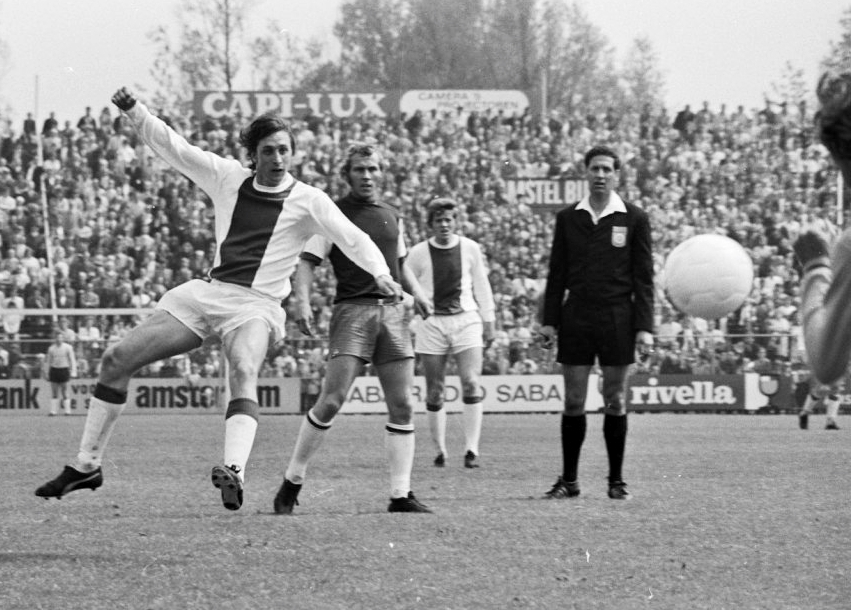







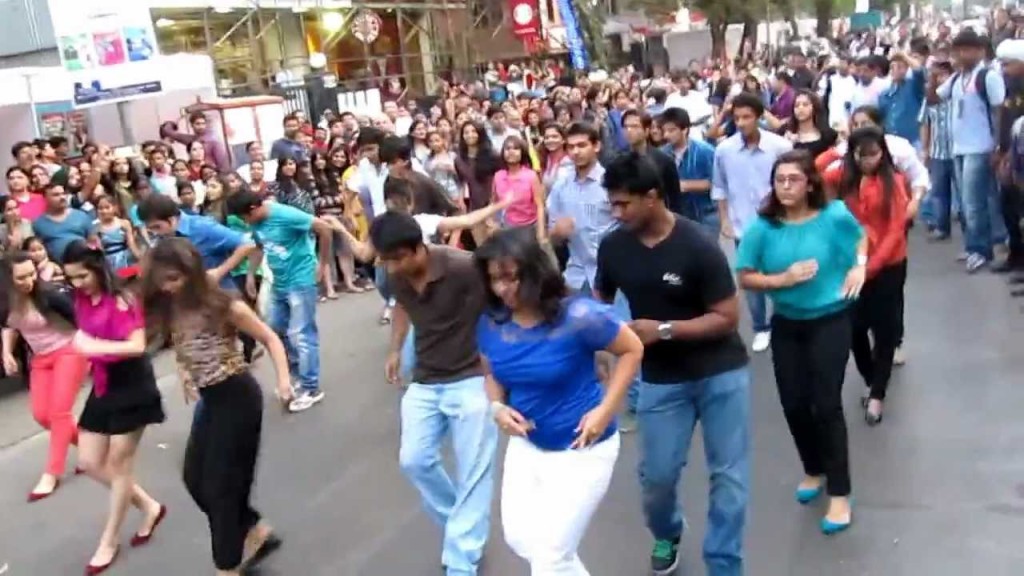











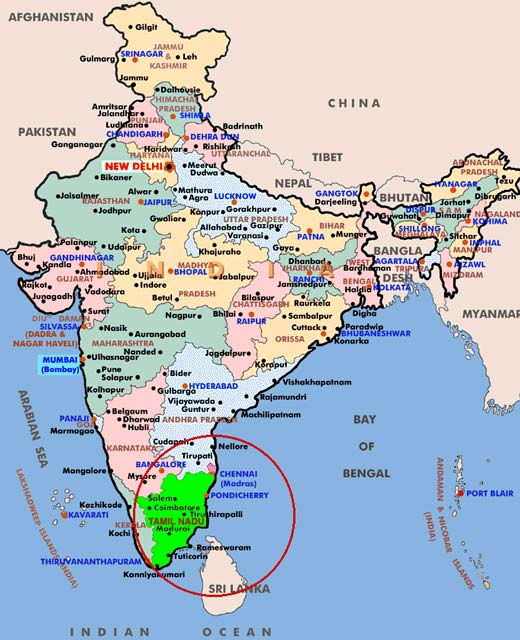
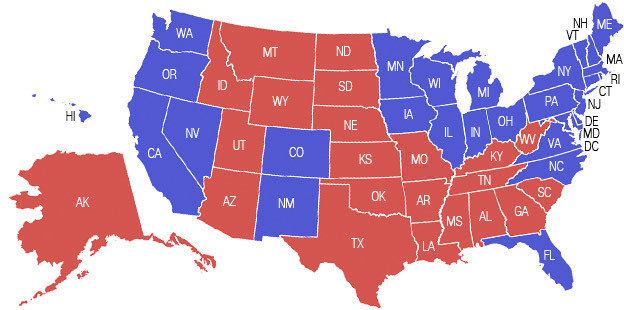
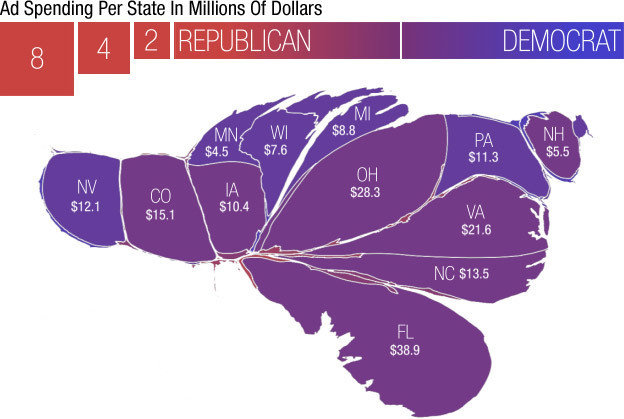

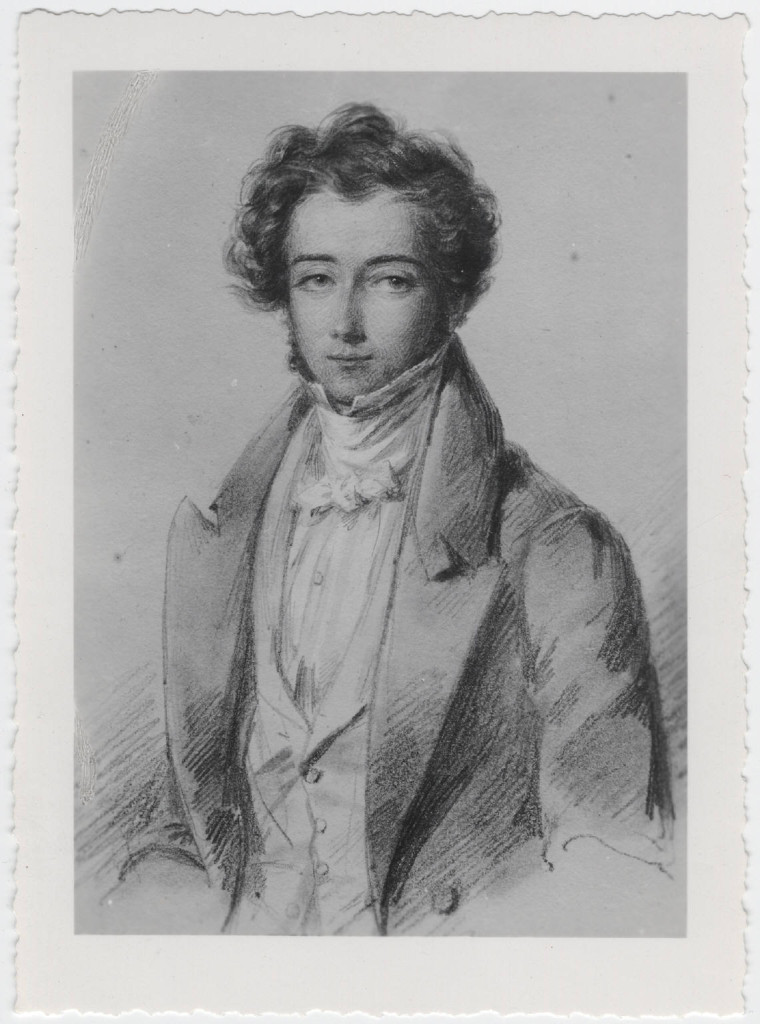
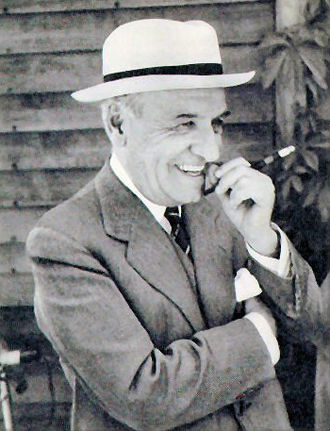


 © The Essayist, 2016